
Make editable Birthday Quest player passes and challenge cards
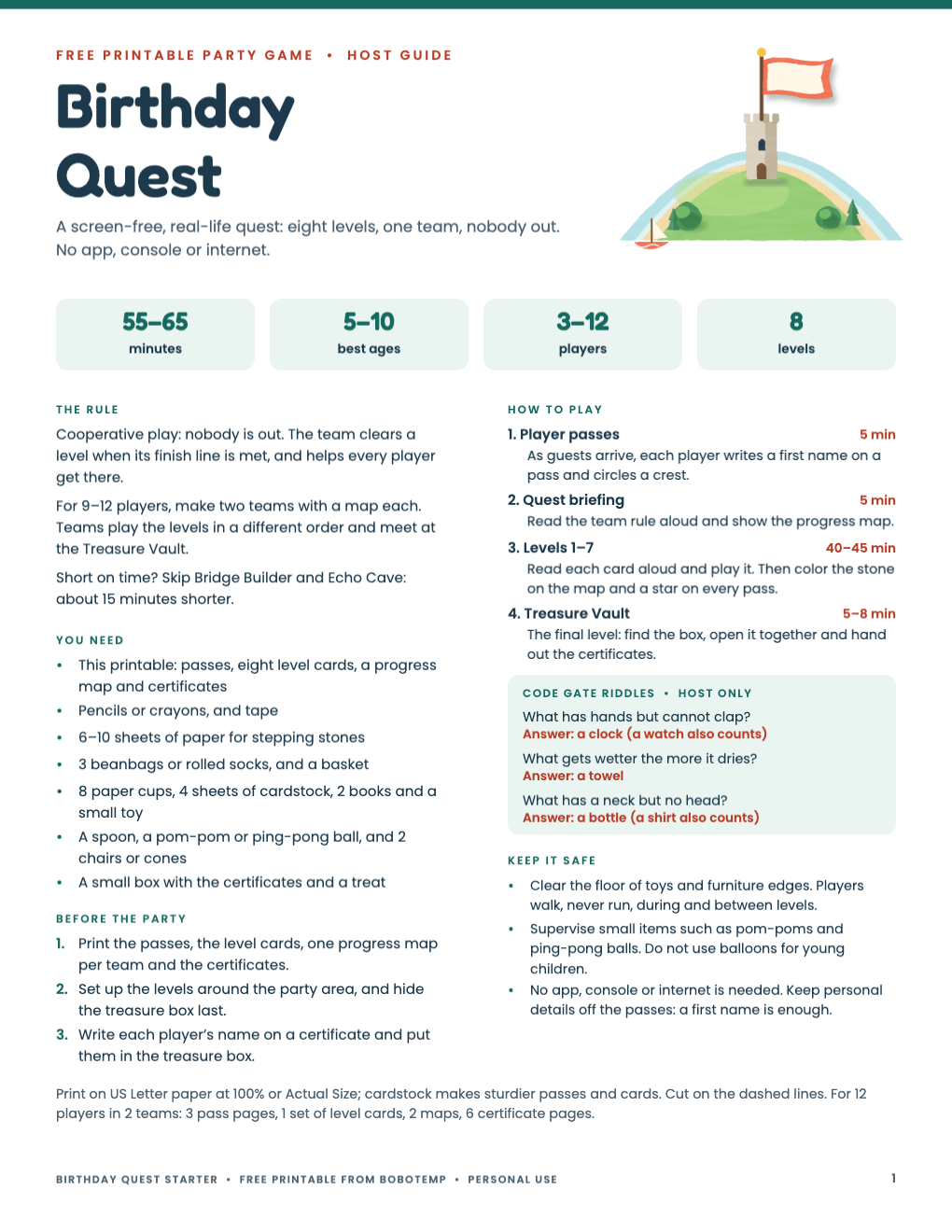
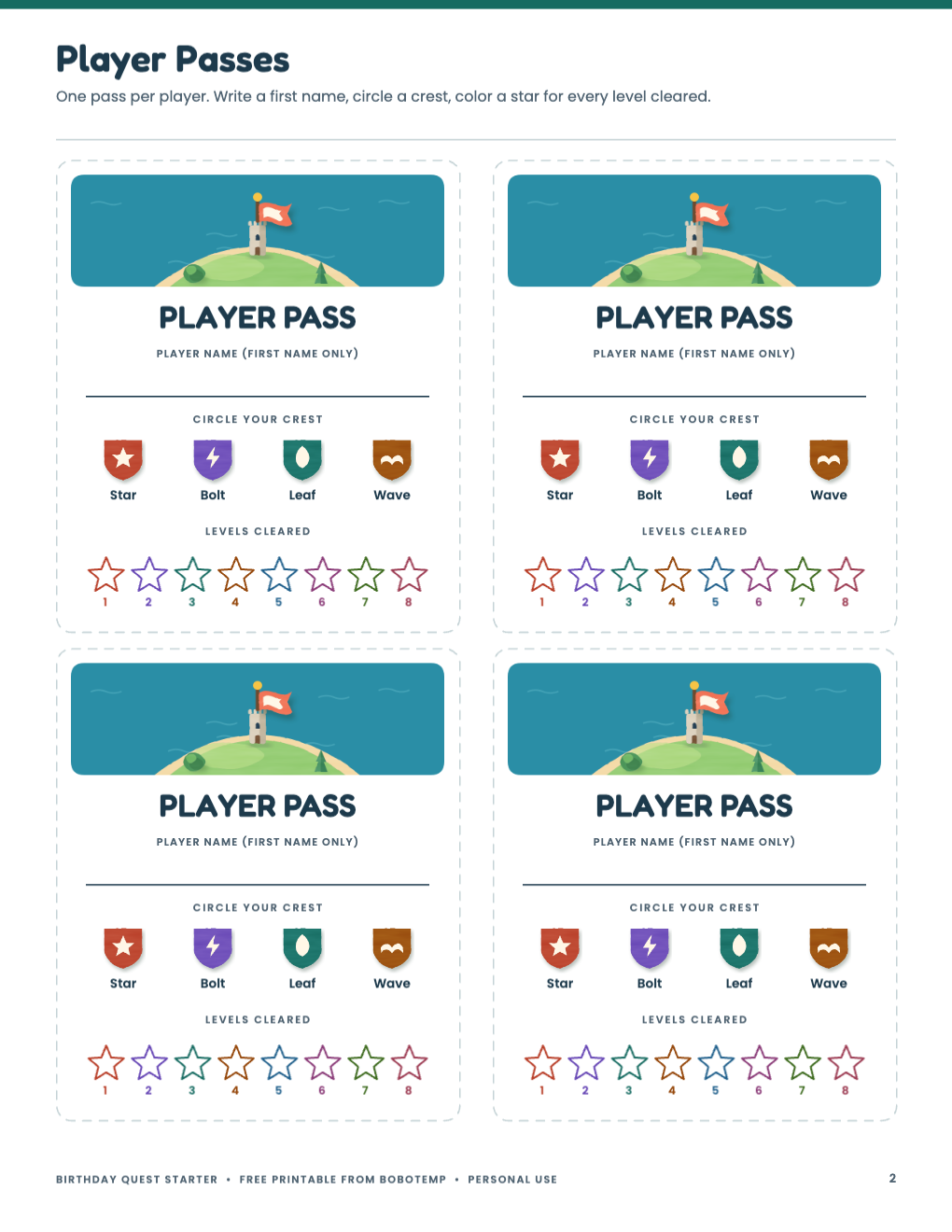
Player passes work when they move guests through a real activity. They do not need a gaming account, avatar purchase or copied franchise artwork. Build an original pass around a team icon, four level spaces and the information the host actually needs.
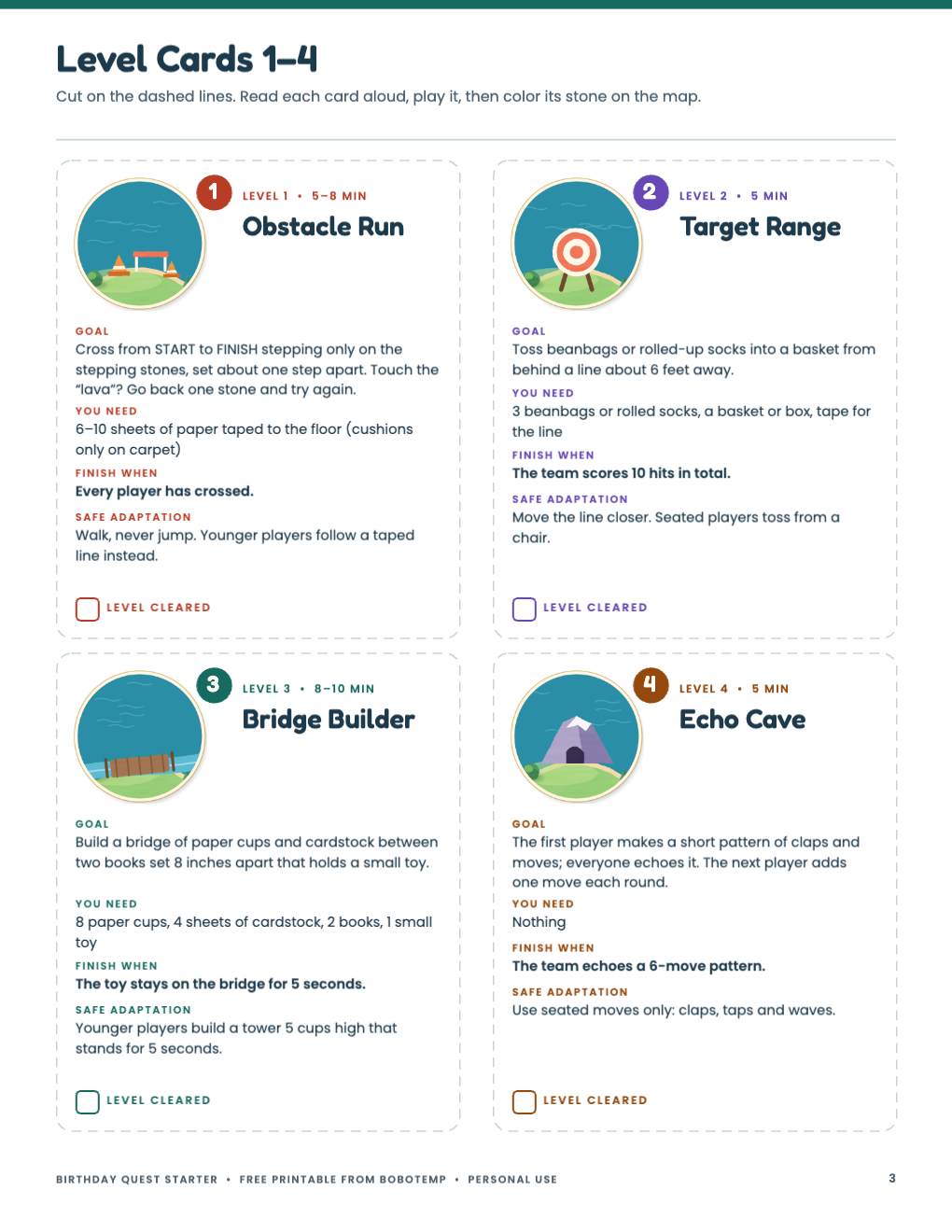
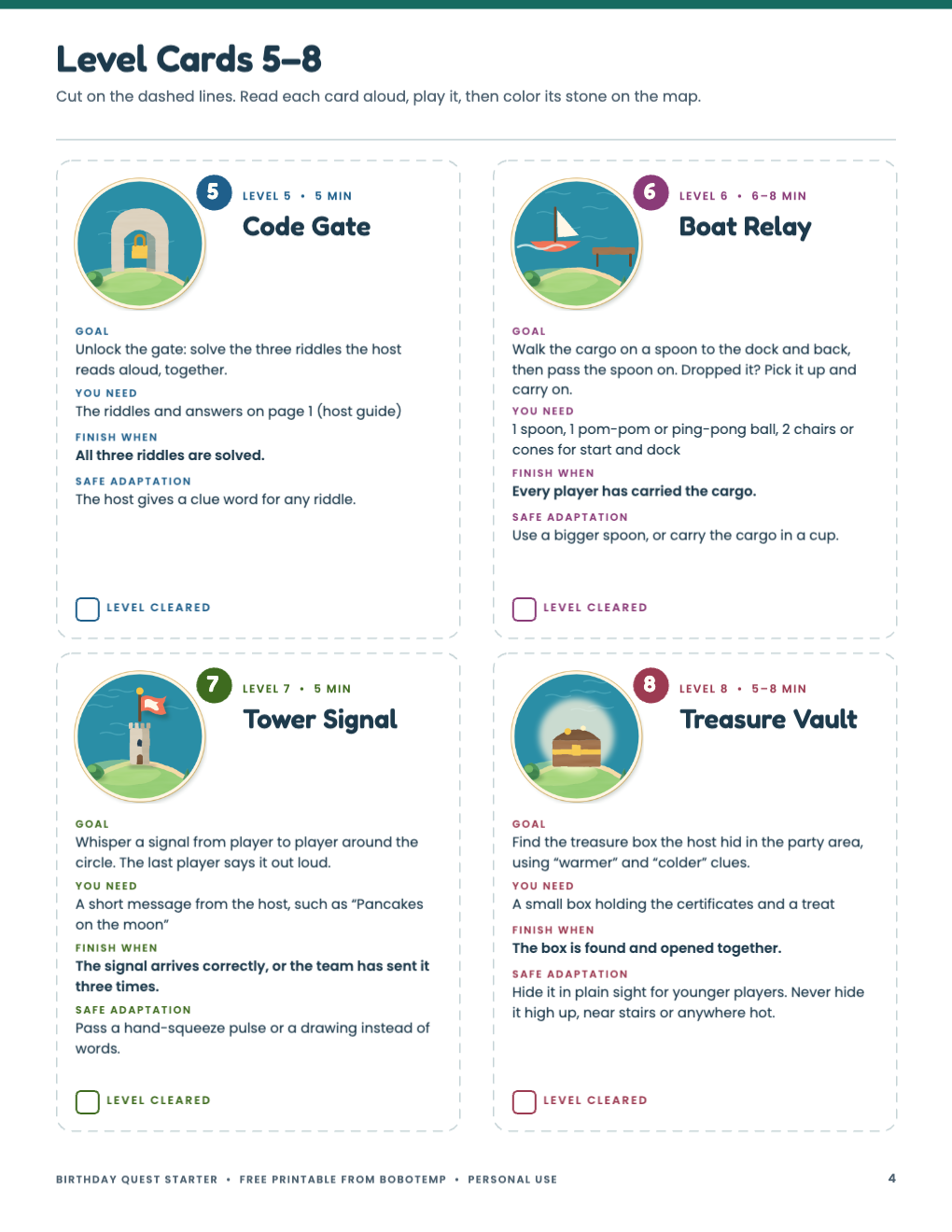
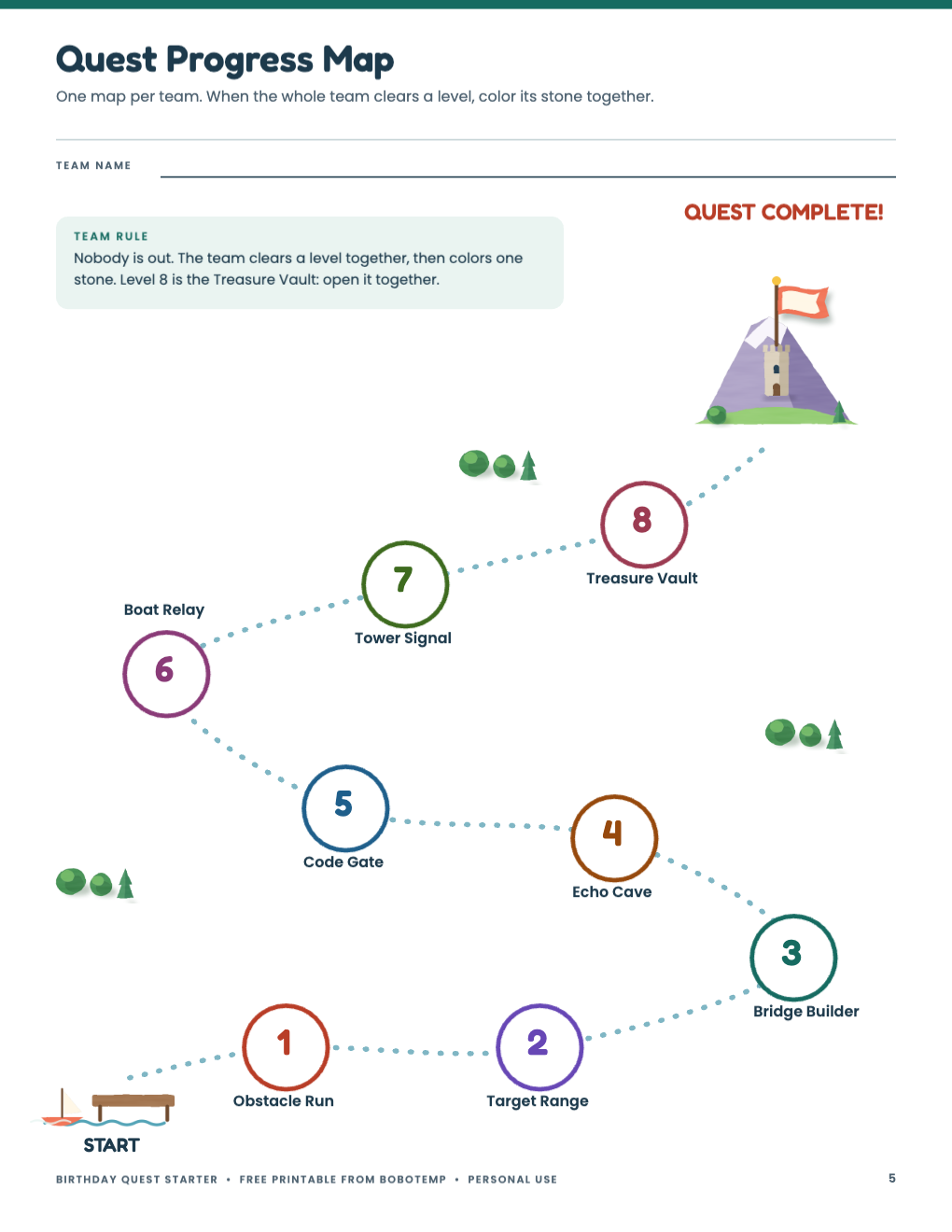
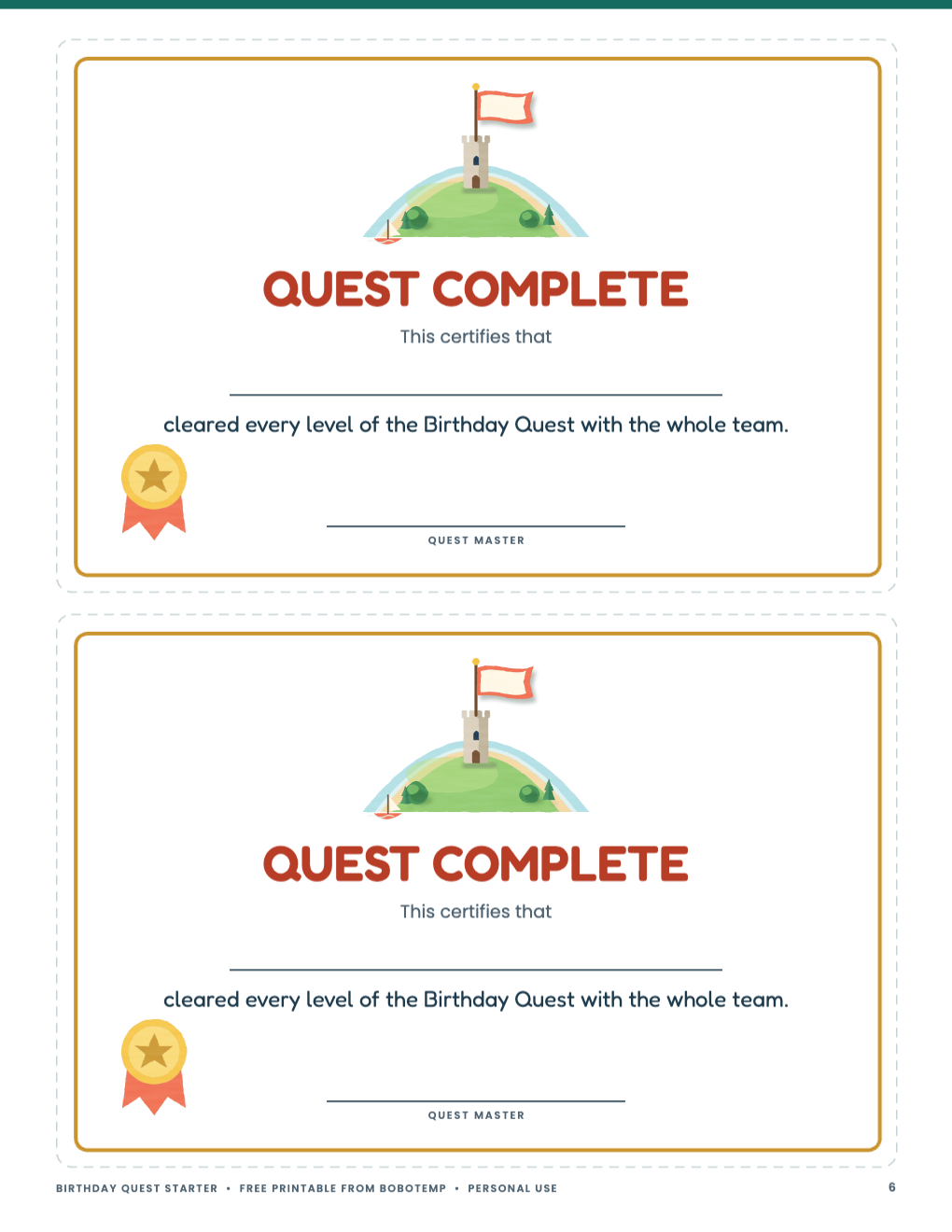
Free starter: VQ-FREE-01 is a separate six-page starter with player passes, eight level cards, a cooperative progress map and completion certificates. Its official editable package is signed for BoboCreate Desktop 0.3.19 or later. The VQ-01 invitation master remains private.
Both downloads are the free edition. Importing it uses one of BoboCreate Free’s three design places. In Desktop 0.3.19 or later, its 18 verified official images do not use personal-image places; images added by the user still count normally.
Plan the pass before opening the editor
Write the four challenges and station order on paper. Then decide what the pass records. A useful front has the player’s chosen name, a team color plus shape, and four empty stamp spaces. A useful back has the station order and a one-line reminder such as “Walk between levels and help your team.”
| Include | First name or invented nickname, team icon, level progress and final title. |
|---|---|
| Leave out | Gaming username, login, date of birth, home address and photograph. |
| Host field | A small team number that helps route groups without ranking children. |
| Accessibility | Pair every color with a shape and use words as well as icons. |
Use one visual system across every card
Pick four original symbols—circle, star, bolt and flag, for example—and assign one to each level. Repeat the same symbol on the pass, challenge card and station sign. Children can then find the next station without reading a paragraph. Keep the palette to four strong colors plus one neutral background.
Avoid visual language that belongs to a particular game: named currencies, recognizable maps, character silhouettes, branded type treatments or copied item cards. “Level,” “quest” and “player” are broad concepts; the design around them must remain original.
Fit editable names without breaking the layout
Test a short name and a realistic long name before deciding the text-box width. Set a minimum readable size rather than allowing the name to shrink until it technically fits. If the longest value needs two lines, make that the intended layout and keep the level icons below it.
- Use uppercase only when the selected font remains readable in a long name.
- Keep at least 0.25 in between text and a cut edge; more is safer for home cutting.
- Do not place a stamp box behind an editable text area.
- Use the same label and field order on every team variant.
- Export a proof after personalization; the editor view is not the final print check.
Write challenge cards children can run
Each card needs an objective, supplies, finish condition and one safe adaptation. “Build a tower” is incomplete. “Using twelve cups and ten cards, build a tower that holds one beanbag for five seconds” tells the team when it is done. Add “a teammate may direct instead of building” so participation is not limited to one physical role.
Use six to eight minutes per station. Put detailed adult setup on a separate host sheet, not in tiny type on the child’s card. If a card depends on equipment, name the exact safe item rather than leaving the host to improvise.
Print, cut and test the route
Player passes fit well on medium cardstock; challenge cards can be printed two or four to a Letter sheet when the exported layout provides cut guides and adequate margins. Print at Actual Size. Cut one proof first and make sure no text enters the printer’s unprintable area.
Walk the route holding the finished pass. Can you see the next symbol? Can a helper stamp it without covering the name? Does the last station lead back to food or cake without crossing another active game? A route test catches more problems than another decorative edit.
Use the official free starter
The free Birthday Quest starter has its own stable design identity, checksum manifest and verified official signature. It contains the player passes, eight challenge cards, cooperative progress map and certificates described above without exposing unrelated premium pages.